

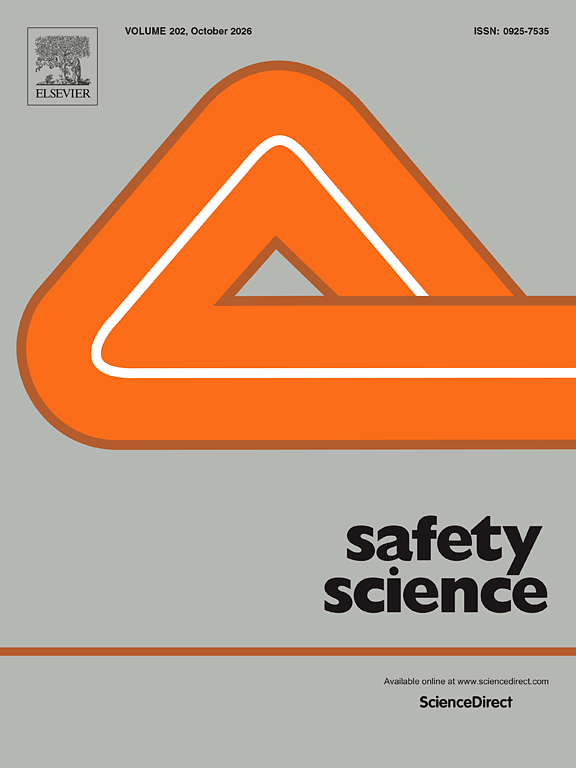
 Synensys is proud to contribute to newly published research in Safety Science demonstrating how System-Theoretic Process Analysis (STPA) can be applied to improve safety across large-scale, complex healthcare systems.
Conducted in collaboration with leading experts from the Massachusetts Institute of Technology (MIT), the study explores how system safety engineering methods can be extended beyond traditional technical applications to address the organizational, regulatory, and data-driven challenges inherent in modern healthcare.
The Challenge: Complexity in the U.S. Healthcare Data Ecosystem
The U.S. healthcare system relies on a vast, interconnected network of organizations, technologies, and regulatory bodies responsible for generating and managing clinical data. This ecosystem supports diagnosis, treatment decisions, public health monitoring, and research.
However, the system has evolved organically over time, resulting in:
- Fragmented data standards and inconsistent terminology
- Limited interoperability across systems and organizations
- Gaps in accountability and oversight
These challenges contribute to preventable risks, particularly in laboratory data, which plays a central role in clinical decision-making.
 Synensys’ Role in Advancing System Safety
As a contributing organization, Synensys helped apply STPA, a system-theoretic hazard analysis method, to evaluate the healthcare laboratory data ecosystem at a national scale.
Unlike traditional safety approaches that focus on component failures, STPA:
- Examines interactions between people, processes, and technology
- Identifies how risks emerge from organizational structures and decision-making dynamics
- Provides a framework to anticipate hazards before they result in harm
This work builds on Synensys’ expertise in system safety, hazard analysis, and complex system design, reinforcing our role in advancing safety methodologies across high-consequence domains.
 Key Insights and Findings
The research uncovered critical systemic issues impacting patient safety, including:
- Hidden Gaps in Accountability
The study revealed that responsibilities for critical safety functions were often unclear or unassigned, with stakeholders assuming others were responsible.
- Missing Feedback and Oversight Mechanisms
In many cases, organizations lacked the feedback loops necessary to detect and correct unsafe conditions before they escalated.
- Risks Introduced by Health Information Technology
The analysis found that health IT systems can introduce new risks, such as misleading data aggregation, which can lead to incorrect clinical decisions.
- Systemic Interoperability and Data Standardization Challenges
Variability in how data is structured, coded, and shared creates barriers to safe and effective communication across the healthcare ecosystem.
 From Insight to Action: Recommendations for Safer Systems
Using STPA, the research team generated actionable recommendations to address systemic risks, including:
- Strengthening regulatory oversight and accountability structures
- Establishing clearer data standards and terminology frameworks
- Improving feedback mechanisms across organizations
- Developing national-level health IT safety reporting and analysis capabilities
These recommendations provide a roadmap for transitioning from a reactive approach to safety toward a proactive, system-driven model.
 Driving the Future of System Safety
This research demonstrates that safety challenges in healthcare are not simply technical—they are systemic, emerging from interactions across technology, people, and policy.
By applying system-theoretic principles, Synensys and its partners are helping organizations:
- Better understand complex risk environments
- Design safer, more resilient systems
- Improve outcomes across mission-critical domains
As healthcare and other industries continue to evolve, Synensys remains committed to advancing innovative safety engineering approaches that deliver measurable impact at scale.
To explore the full research, read:
Using STPA to perform hazard analysis of social and organizational systems: a case study of patient safety in the U.S. healthcare system